
Know what to verify before choosing a venue
Pokie names and RTP figures do not confirm a venue’s settings, operating hours or the protections that apply to online play.
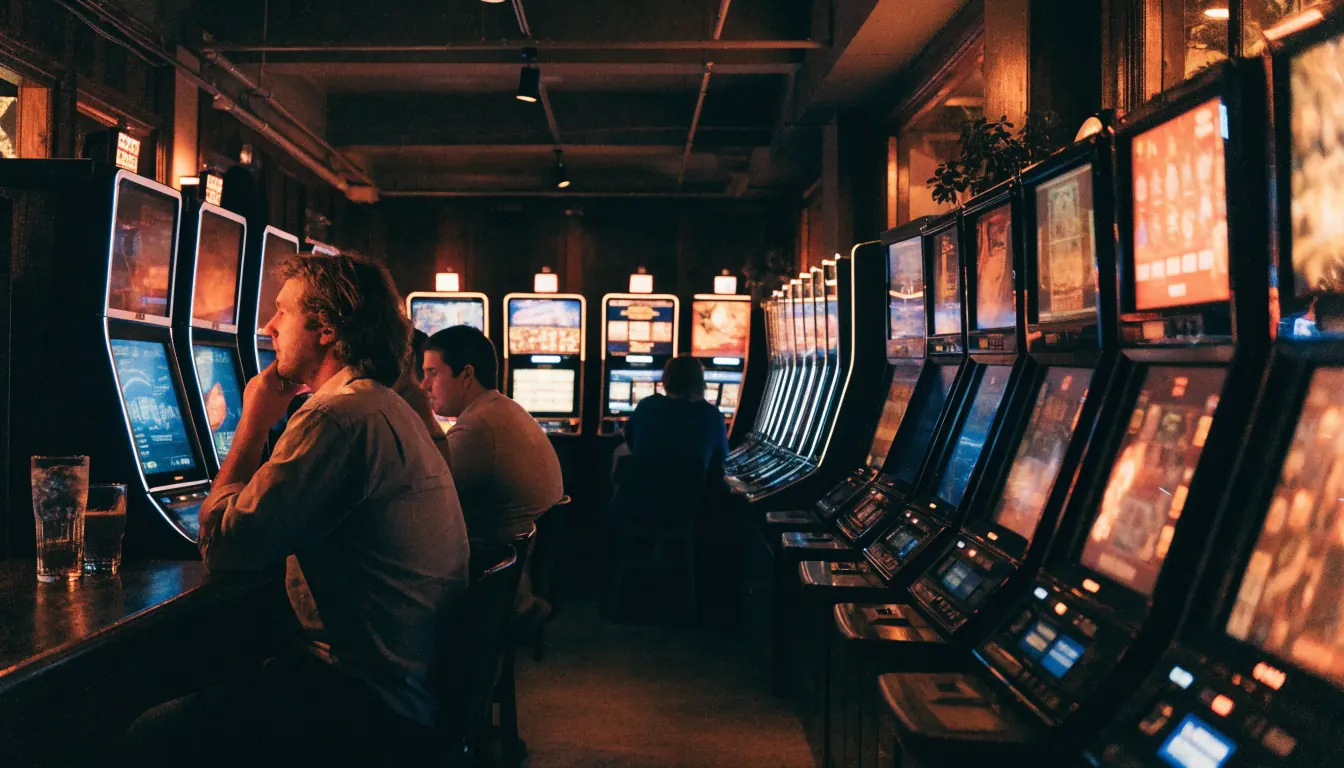
What “Best Pokies” Can—and Can’t—Tell You
Calling a pokie “best” can mean different things: a player might be thinking about its theme, features or potential return. For someone comparing South Australian venues, though, the label does not establish which game pays more, or whether a particular machine is a better choice. A game name alone cannot tell you the return setting in use at a specific casino.
Return to player, or RTP, is the percentage of money wagered that a game is designed to return to players over time. It is a theoretical measure across many plays, not a promise about what you will receive in a visit or a particular session. A specialist review has reported that some providers let casinos choose between different RTP settings for the same pokie. If that applies to a game, its return percentage may differ from one casino to another, even when the game itself has the same name.
That distinction matters when you are looking for the best-paying pokies in South Australia. A figure attached to a game may not describe the setting used at every venue. Nor does a headline percentage mean that a player will receive that share back after a particular number of spins. It describes a model over time; your outcome can be very different.
If you’re looking at pokies options in South Australia for 2026, this list gives you a starting point for checking the details that matter to you. Review each operator’s terms and availability before deciding where to play.
-
Ricky Casino
- Payout speed
- crypto under 1 hour, PayID 1-3 business days
- Min. deposit
- A$20 (A$30 to qualify for the bonus)
Ricky Casino lists crypto withdrawals in under an hour and PayID withdrawals in 1–3 business days. The minimum deposit is A$20, or A$30 to qualify for the bonus.
-
Wild Tokyo
- License
- Curacao
- Payout speed
- crypto 30-60 minutes, fiat 1-5 days
- Min. deposit
- A$10
Wild Tokyo lists a Curaçao licence. Its stated payout times are 30–60 minutes for crypto and 1–5 days for fiat, with a A$10 minimum deposit.
-
Neospin
- License
- Curacao Gaming Control Board OGL/2023/176/0095 (Hollycorn N.V.)
Neospin is listed with Curaçao Gaming Control Board licence OGL/2023/176/0095, held by Hollycorn N.V.
-
Bizzo Casino
- License
- Curacao Gaming Control Board (TechSolutions Group N.V.)
Bizzo Casino is listed with a Curaçao Gaming Control Board licence held by TechSolutions Group N.V.
-
Golden Pokies
- License
- Curacao
Golden Pokies is listed with a Curaçao licence. That is the available detail to consider when assessing this operator.
-
Thor Casino
- License
- Curacao – Antillephone N.V. (Versus Odds B.V.)
- Min. deposit
- EUR 20
Thor Casino is listed with a Curaçao licence held by Antillephone N.V. for Versus Odds B.V. Its stated minimum deposit is EUR 20.
-
SpinsUp
- License
- Curacao Gaming Control Board OGL/2023/174/0082 (Dama N.V.)
SpinsUp is listed with Curaçao Gaming Control Board licence OGL/2023/174/0082, held by Dama N.V.
-
Lucky Dreams
- License
- Curacao
- Min. deposit
- A$20 (POLi)
Lucky Dreams lists a Curaçao licence and a A$20 minimum deposit for POLi.
-
House of Pokies
- License
- international iGaming licence – jurisdiction not named in the source
- Payout speed
- PayID 1-24 hours
- Min. deposit
- A$30 (PayID from A$10)
House of Pokies is described as holding an international iGaming licence, but the jurisdiction is not named. Its stated PayID payout time is 1–24 hours; the minimum deposit is A$30, or A$10 for PayID.
-
MrPacho
- Payout speed
- crypto 30-120 minutes, fiat 24-72 hours
- Min. deposit
- A$30
MrPacho lists crypto payouts in 30–120 minutes and fiat payouts in 24–72 hours. Its minimum deposit is A$30.
The game’s setting is only one limit on what a label can tell you. A percentage cannot predict the result of your next spin, and a past win does not make a future win more likely. Each spin is generated separately by a Random Number Generator (RNG), which selects the outcome for that play. In practical terms, a run of losses does not make a win “due”, and a recent win does not make the next result less likely to pay. The machine has no memory of what happened to you before.
This is why a short session cannot confirm whether a game’s stated return is accurate or whether one pokie is better than another. RTP is about the theoretical behaviour of a game over a very large number of plays, while an individual player experiences only a small part of that picture. Even repeated visits do not turn a random outcome into a predictable pattern.
When comparing pokies in South Australia, it helps to separate what a description can establish from what it cannot. A game’s published return figure may describe a particular configuration, but it does not necessarily prove that the same configuration is active at every venue. The game title does not, by itself, reveal which setting has been selected. Without reliable information about the setting in use, comparing figures from different sources can give a false impression of a like-for-like comparison.

The same caution applies to searches for South Australia casino pokies or machines in a city centre. A broad label such as “best” does not verify a game’s current setting at a named casino or club. It also does not rank venues by their machines. A list based only on titles or general descriptions would leave out the detail that matters most to a return comparison: the setting for the specific game at the specific place.
If you are considering a pokie, treat a return percentage as context rather than a forecast. It can help explain a game’s theoretical design when the figure and its configuration are clearly identified. It cannot tell you how much you will win or lose, how soon an outcome will occur, or what the next spin will produce. Those limits apply whether you are comparing games in South Australia or looking at a particular venue.
The phrase “best pokies” can therefore be useful as a starting point for asking what “best” means, but it cannot settle the question on its own. A higher stated return is not a guarantee of a better session, and a familiar game name is not proof of a particular return setting. Most importantly, no RTP figure changes the independence of each spin: the next outcome is not adjusted to compensate for earlier results.
When a Venue’s Machines Are Operating
A venue’s opening hours and the hours when its pokies are available are not necessarily the same thing. A search for early or late play cannot be answered from a staffing rule alone: that rule describes what a qualifying venue must provide while its machines are running, not when a particular venue opens, closes or switches them on.
A report by regionriverina.com.au describes a requirement taking effect from 1 July: a venue operating more than 20 gaming machines must have a dedicated responsible gambling officer (RGO) on duty during the periods those machines are in operation. The threshold concerns the number of machines at the venue, and the duty is tied to their operation. It does not establish that every venue has an RGO at every hour of the day, or that machines are available whenever the venue itself is open.
That distinction matters if you are trying to establish whether pokies are operating at a particular time. The presence of a bar, dining area or other facility being open does not, by itself, confirm that gaming machines are running. Nor does a general statement about machine operation confirm a specific venue’s current schedule. For that, you would need information about the venue itself; the RGO rule cannot substitute for it.
The role is intended to provide a designated point of responsibility for gambling-related concerns at venues above the threshold. It is not simply a name for any staff member who happens to be nearby. If machines are operating at a qualifying venue, the reported requirement is that the dedicated officer be on duty then. That gives the requirement a practical connection to the periods when patrons can gamble, rather than only to a venue’s general staffing arrangements.
The same report describes a transition period for venues to make changes. It says venues had a one-month grace period to remove signage and put responsible gambling officers in place. A grace period is a limited adjustment window, not an ongoing exception to the requirement. It should not be read as proof that a venue has completed the changes, or as evidence about whether its pokies are operating at a particular moment.
Signage has its own placement restrictions. A venue must remove signs directing patrons to gaming lounges when those signs are within eyeshot of ATMs or EFTPOS terminals. Signs directing patrons to ATMs must also be removed if they are within eyesight of gaming machines. Those rules concern the visibility and placement of signs; they do not tell you a venue’s opening time or whether its machines are switched on. A sign’s presence or absence is not a reliable way to infer machine availability.
The reported rules also include a gambling incident register. The register is for recording relevant occurrences, including situations where a patron’s behaviour indicates that they may be at risk of gambling harm or affected by it. In that way, the requirement covers more than having an officer physically present: it also calls for a record of incidents that may need attention. The register is an internal venue record, not a public timetable or a live indicator of whether pokies are operating.
For someone deciding whether to visit, the useful distinction is between three different things: the venue’s own opening hours, the operating hours of its machines, and the period when a dedicated RGO must be on duty. The rule reported for venues with more than 20 machines links the officer’s duty to machine operation. It does not supply a schedule for any individual South Australian venue, and it does not mean every venue is covered by the same threshold.
So, a statement that a venue is open does not settle whether its pokies are available, and a rule about an RGO does not answer whether a venue is open early, late or at the moment you check. Those are venue-specific details. The operational safeguard described here is narrower but concrete: when a qualifying venue’s machines are operating, its dedicated RGO is required to be on duty, alongside the incident-recording requirement described in the report.
Getting to a Venue from the Airport or CBD
If you are looking for pokies near an airport, in a central business district or close to where you are staying, the useful first step is identifying a specific venue. A broad search for South Australia does not tell you which suburb or town you mean, and a phrase such as “near me” depends on your location settings. Neither phrase, by itself, establishes that a particular venue is nearby.
Naming a venue or estimating travel time without dependable location details could send you in the wrong direction. A map result may help you investigate, but check that it refers to the venue you intend to visit rather than a similarly named place or a result outside the state.
Airport searches need the same care. “South Australia airport” is not a precise starting point: the state contains different towns and travel routes, and a result labelled “near the airport” may refer to a different airport or locality than the one you have in mind. Before setting out, confirm the venue’s address directly and compare it with your actual arrival point. Do not assume that a venue is inside an airport, directly nearby or straightforward to reach just because those words appear together in a result.
The same applies to CBD searches. “CBD” can mean different central areas, depending on the city or town. A result for pokies in a central area does not, on its own, confirm the address, the distance from your accommodation or whether it is convenient to reach on foot or by transport. Once you have an exact venue name, use its own contact information or a current map listing to check the location. If those details do not agree, contact the venue before travelling rather than relying on a vague label.
Searches can also combine a state with a direction, such as “north”, or with another place name. Those words are not enough to establish which locality is intended. A place name may refer to more than one area, and a result associated with a state-wide search may not be in the town you expect. Check the complete address, including the suburb or town and state, before treating a listing as relevant.
For a “near me” search, your device may use a location setting to order results, but that does not confirm that an address is accurate or that a listing is current. Check the venue’s own details and make sure the map pin matches the written address. If you are travelling from an airport or another unfamiliar starting point, enter both the confirmed destination and your actual starting point into a mapping service; do not rely on a general description such as “near the CBD”.
Do
- Confirm the venue's exact identity and address first
- Use a mapping service with a confirmed starting point
- Contact the venue directly to verify current location
Don't
- Rely on vague labels like "near the CBD" or "near me"
- Assume a venue is inside an airport based on search results
- Trust map pins without checking the written address
The practical limit is simple: proximity is meaningful only when both ends of the journey are clear. Confirm the venue’s identity and address first, then check the route using your chosen transport method. Without those details, a claim that a venue is near an airport, a CBD or your current location would be guesswork rather than useful directions.
Online Pokies, Deposits and the Limits of Legal Protection
Searching for real-money online pokies from South Australia can make offshore offers appear relevant, especially when they mention bonuses, high limits or access without a deposit. Those claims do not change the legal position or provide a guarantee that you can withdraw winnings.
Under the Interactive Gambling Act 2001, companies cannot legally provide real-money online pokies to people in Australia without a domestic licence. No licences for online casinos have been issued, so there is no Australian-licensed online casino. The restriction applies nationally; being in South Australia does not create a separate route to a locally licensed online pokies service.
This distinction matters when considering an online offer. A website may accept Australian customers or display terms aimed at them, but that does not make it an Australian-licensed casino. Nor does an advertised bonus, a low-deposit offer or a high maximum bet establish that the service is lawful here or that its promises will be honoured. Marketing language is not legal protection.

What happens if winnings are withheld?
The difficult point is the remedy available to you. If an offshore casino refuses to pay winnings, Australian players have no legal recourse in Australia to compel payment. A displayed balance or a statement that a withdrawal has been approved is not the same as a route to enforce payment under Australian law.
That leaves you exposed to the operator’s own terms and decisions. A dispute over a withdrawal may therefore be difficult to resolve, even if you believe you have met the site’s conditions. Before treating any claimed winnings as money you can rely on, consider that the Australian legal system cannot provide the protection available against a locally licensed online casino—because no such Australian licence exists.
The same caution applies to offers described as “no deposit” or “best paying”. These phrases describe marketing claims, not an Australian approval or a dependable measure of what you will receive. A large advertised limit also says nothing, by itself, about whether a withdrawal will be paid.
Deposits do not settle the legal question
A payment option tells you how money may be transferred; it does not establish that an online casino is licensed in Australia, that its games are fair, or that you can recover funds if a dispute arises. Do not treat the ability to make a deposit as evidence that the service is protected under Australian law.
The law’s focus is on companies providing prohibited online gambling services, rather than making an individual player criminally liable simply for playing. That does not remove the practical risk: a player can still lose deposited money or be unable to collect winnings, with no Australian legal recourse against an offshore casino that refuses payment.
Legal Risk
Australian players have no legal recourse in Australia to compel payment if an offshore casino refuses to pay winnings.
For anyone weighing an online offer against visiting a South Australian venue, the key difference is not the headline bonus or betting limit. It is the absence of an Australian-licensed online casino and the limited protection if an offshore operator withholds money. A polished website cannot fill that gap.
What to Check at a Pokies Venue
A venue’s reputation or the number of pokies it has does not tell you what safeguards are in place. If you want to understand how a South Australian venue handles gambling-related concerns, focus on the staff role and record-keeping requirements that have been reported for qualifying venues.
According to a report by regionriverina.com.au, venues with more than 20 pokies are required, from 1 July, to have a dedicated responsible gambling officer (RGO) on duty whenever those machines are operating. The threshold matters: the reported requirement is tied to the number of machines, and the officer’s duty to be present is tied to their operation. It does not mean that every venue must have an RGO on duty at all times.
An RGO is a venue-based point of contact for responsible gambling matters. If you want to check whether a venue has one on duty, ask a staff member directly. You can also ask how to contact the officer if you or someone with you is concerned about gambling-related behaviour. A clear answer may help you understand who is responsible for responding, but it is not a guarantee about how any individual concern will be handled.

The same report describes a requirement for venues to keep a gambling incident register. This is intended to document occurrences, including situations where a patron’s behaviour indicates they may be at risk of gambling harm or already affected by it. The register is a record of incidents; it should not be mistaken for a public log or a measure of how safe a venue is. You should not expect staff to disclose another patron’s personal information.
You can ask whether the venue keeps the required register and who is responsible for recording an incident. If you raise a concern, it may help to describe the behaviour you have noticed and ask what response is available. You do not need to know whether an incident has been recorded for someone else. The relevant question is whether staff can explain how they respond to a concern and who can take it further.
These checks are more useful than relying on a broad label such as the “best” pokies venue. They do not establish which venue has better machines, and the presence of an RGO or register cannot tell you how a particular visit will go. They give you specific points to ask about: whether the venue falls within the reported machine threshold, whether its machines are operating, who the RGO is, and how concerns are recorded.
If staff cannot answer straight away, that alone does not establish that a requirement has been breached. You can ask for a manager or return to the question before deciding whether you are comfortable staying. The point is to understand the safeguards relevant to the venue, rather than treating an attractive setting or a confident claim as proof.
- Confirm if the venue has more than 20 pokies
- Ask if a dedicated RGO is currently on duty
- Verify if the venue maintains a gambling incident register
- Ask staff how they respond to gambling-related concerns
Why 24-Hour Availability Cannot Be Confirmed Here
A venue’s usual opening hours and the hours when its pokies are available are not necessarily the same thing. A listing that says a club or hotel is open late does not, by itself, establish that its gaming area is open throughout the night. Nor does a general claim about “24-hour pokies” confirm that a particular South Australian venue is open now.
If you are considering a late-night visit, check the venue’s own current information or contact it directly before travelling. Ask specifically whether the gaming area is open at the time you intend to arrive; a venue’s general trading hours may not answer that. Treat old listings and unsourced posts cautiously, especially when they do not give a date or distinguish the venue from its gaming area. Opening information can change, so a result you saw previously is not a reliable confirmation of tonight’s arrangements.
There is a separate rule about staffing when machines are in operation. A report by regionriverina.com.au described a requirement taking effect from 1 July: venues with more than 20 gaming machines are to have a dedicated responsible gambling officer (RGO) present while those machines are running. That requirement concerns oversight during operation. It does not establish a venue’s opening schedule, mean that the venue operates overnight, or confirm that its machines are available at a particular moment.
The distinction matters when interpreting information about South Australia pokies hours. A statement about an RGO being on duty applies to the period when machines are operating at a qualifying venue; it is not a promise that they will be operating at every hour. Conversely, a venue being open does not prove that its gaming area is open at the same time. One detail cannot stand in for the other.

For a practical check, look for information issued by the venue itself and confirm the date it was updated. If the wording is unclear, ask about both the venue’s entry hours and the gaming-area hours. If you cannot get a clear answer, do not treat a broad “open” label as confirmation of all-night pokies. That is a modest inconvenience compared with arriving on the assumption that a machine room is available when it may not be.
Crown Casino Searches and the South Australian Results
A reference to Crown in a South Australian pokies search does not, by itself, show that a Crown venue is in South Australia. Nor does a name in a search result establish where a venue is, which machines it has, or whether those machines are available to play. Treat the location and the venue as separate things to confirm, rather than assuming that a familiar casino name belongs to the state named alongside it.
The same caution applies when you are looking for a particular pokies room. A room’s name does not tell you its size, machine selection or current availability. Those details need to come from information tied to the venue itself. If a listing does not clearly identify the location and the operator, it cannot reliably answer whether you have found a South Australian venue or a room that suits what you are looking for.
Claims about the “best” room are also difficult to assess without comparable details. A confident label is not evidence of a particular machine selection or a better playing experience. If you are comparing rooms, look for clear, venue-specific information and take care not to confuse a general reference to Crown with confirmation about a South Australian location.
A search for the maximum cash payout at pokies raises a different issue: the name of a casino does not establish a payout amount. A headline figure, where one is given, should not be treated as a promise about what a particular machine will pay or how a payout would be handled. The relevant terms may depend on the machine and the venue, so a broad reference to Crown cannot settle them.
This matters because search results can put a venue name, a state and a machine-related phrase together without explaining how those details connect. Read the underlying listing for a precise location and check that any machine or payout information refers to that same venue. If those details are unclear, the result does not establish that the venue is in South Australia or answer what is available there. A familiar name may help you recognise what a result is referring to; it is not a substitute for identifying the place and the specific information you need.
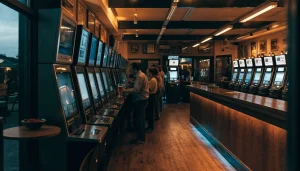
CBD Clubs and What Is—and Isn’t—Verified
A club name or a city-centre label is not enough to establish where pokies are available. South Australia has clubs, but a name appearing in a directory, map result or old discussion does not by itself confirm that the venue still operates, that it has pokies, or that those machines are in the CBD. Treating those details as settled without checking the venue directly risks sending you to the wrong place.
That distinction matters when looking for a club near a particular street, landmark or transport stop. A venue may be described as “central” while sitting outside the area you have in mind. Even a confirmed address would not, on its own, establish the number of machines or whether they are operating when you arrive. Those are separate details, not things that can safely be inferred from a club’s name or location.
The same caution applies to claims about the “best” pokies in a South Australian CBD. A city-centre setting does not show which games are installed, what return setting a game uses, or whether one venue offers better odds than another. A machine’s return percentage can depend on the setting selected by the casino where providers allow options, and each spin remains an independent random event. A nearby address is not evidence of a better chance of winning.
If you are trying to identify a particular club, confirm the exact venue and address with the club before travelling. Ask directly whether pokies are available there and whether the information is current. For machine details, ask the venue rather than relying on a broad label such as “CBD club”.
People looking for self-exclusion at a local venue should also distinguish a general safeguard from a confirmed venue-specific arrangement. Deposit, loss and session limits, along with self-exclusion, are recognised responsible-gambling tools, but their existence as tools does not tell you which local clubs provide a particular process or how to access it. Contact the venue or the relevant support service for current local instructions.
It is also less likely to confuse a club’s address, its machines and its current arrangements as though they were one verified fact.
Cashless Payments: What PayID Does and Doesn’t Establish
PayID is an identifier for a bank transfer, not a gambling account or a payment card. It sits on top of Australia’s New Payments Platform and lets someone send money using an email address, mobile number or Australian Business Number (ABN), rather than entering the recipient’s bank details.
That distinction matters when you see PayID mentioned alongside pokies. A payment option does not tell you whether a gambling service is lawful, who operates it, or whether its games are fair. PayID’s presence is not a licence, an independent check of a game’s operation or evidence that the stated return percentage is accurate. It identifies a way to route a transfer; it does not certify what happens after the money arrives.
For real-money online casino games, the Australian legal position remains relevant regardless of the payment method: operators are not permitted to provide them to people in Australia, and there is no Australian-licensed online casino. A familiar bank-transfer mechanism does not change that position. Nor does it guarantee that a recipient will return money if a dispute arises.
One specialist review says PayID is treated like other qualifying deposit methods at the sites it recommends. That is a description of that review’s approach, not a general assurance about every service or a reason to use one. Payment arrangements can change, so the appearance of PayID should not be treated as a durable measure of a site’s standing.

The same care applies to searches pairing cashless pokies with South Australia or Newcastle. A place name in a phrase does not establish that a venue is in South Australia, or that it offers PayID or cashless play. PayID is a transfer identifier; it is not evidence about a venue’s location, machines or payment arrangements.
Playing Safely: Age, Limits and Self-Exclusion
In South Australia, as elsewhere in Australia, you must be at least 18 to gamble, including on pokies. Age is a legal threshold, not a measure of whether gambling is affordable or safe for you.
If you choose to gamble at a venue, consider setting a limit before you start and sticking to it. Common responsible-gambling tools include deposit limits, which restrict how much you add; loss limits, which set a boundary on losses; and session time limits, which help you decide when to stop. Self-exclusion is another option: it lets you seek to prevent your own access to gambling for a period or longer, depending on the arrangement available.

These tools can help you put boundaries in place, but they cannot ensure you will stay within them or prevent harm. A limit is most useful when you decide it in advance, rather than changing it during play. If gambling is affecting your finances, wellbeing or relationships, taking a break and seeking support may be more appropriate than adjusting a limit.
BetStop is Australia’s national self-exclusion register for licensed wagering operators. Its coverage is limited: it applies to Australian-licensed operators and does not bind offshore gambling sites. Do not assume that registering with BetStop will block access to an offshore site or require that site to honour your exclusion.
For anyone considering pokies in South Australia, the practical point is to decide on boundaries before playing and understand which services those boundaries cover. Deposit, loss and time limits address different parts of play; self-exclusion is a stronger step when limits are not enough. The protection available depends on the setting and operator, so a tool should not be mistaken for a guarantee.
What is the legal age for online gambling in Australia?
You must be at least 18 years old to gamble online in Australia.
Are online pokies legal for Australian players?
You can legally play on offshore sites that accept Australian players, but companies cannot legally offer real-money online pokies to Australians without a domestic licence, and no such licences have been issued. There is no Australian-licensed online casino, and you have no legal recourse in Australia if an offshore casino refuses to pay.
Can casinos change the RTP of their games?
Yes. Some game providers let casinos choose between different RTP settings for the same pokie, so the return percentage can vary between casinos.
What is the cost-benefit calculation of casino promotions?
Compare the bonus with the wagering requirement and any cash-out cap. For example, a $500 bonus with 40x wagering requires $20,000 in bets before you can withdraw winnings; if wagering applies to a $500 deposit plus a $500 bonus at 35x, it requires $35,000 in bets.
What does “wagering requirement” actually mean?
It is the number of times you must wager an eligible amount before you can withdraw bonus winnings. For example, a 40x requirement on a $500 bonus means you must place $20,000 in bets.